Presentation Schedule

The Forum: Global Citizenship: Education, Arts, Media, and the Rise of Extremism [Online]
This presentation will be live-streamed via Zoom (Online Access)
Saturday, 4 October 2025 09:00
Session: Conference Featured Session
Room: Live-Stream Room 1
Presentation Type: Forum Discussion
We are living through a time of great global political and economic change, which is being played out in different ways across the world. Historically, in times of uncertainty and fear of the future, people have turned to political extremes for answers and reassuring, if unnuanced, narratives. Today is no different: in the context of rising global authoritarianism and nationalism, legitimate questions and grievances of the populace in any given country are deflected and misdirected. Scapegoats are sought as people rail against both the existing centres of power and their avatars (the government, the elites, the establishment, the deep state, etc), as well as the amorphous ‘other’ (the foreign, the immigrants, etc). The latter are often blamed by the former for reasons of political expediency and survival, and that is reflected in increasingly divisive and toxic public discourse today.
Culture, media, language, and education play an important role in instilling and fueling extremist ideologies, often subliminally. For example, in a study conducted by University College London (UCL) in 2021, teachers were concerned that students would mimic extremist behaviour seen on social media. They saw themselves as unprepared to deal with extremism at school due to limited training, curriculum constraints, and pressure to simply report at-risk students, rather than engage with them. However, education is often proposed as a solution to counter political polarisation, religious fundamentalism, and online radicalisation by fostering critical thinking and empathy. The Arts are also increasingly recognised as a powerful tool, creating spaces for dialogue that challenge politically delicate topics subtly and in a non-confrontational manner.
How can we disagree well in a polarised world that is increasingly using rhetoric of division and violent means to establish certain norms? What can educators, artists, and professionals do to establish spaces of dialogue and conviviality? What ways of thinking and acting do we need to change within educational institutions, media, and political discourse? Join us for The Forum session in Barcelona to discuss these topics and more with the wide array of international and intercultural perspectives present at the conference.
Biographies
Grant Black
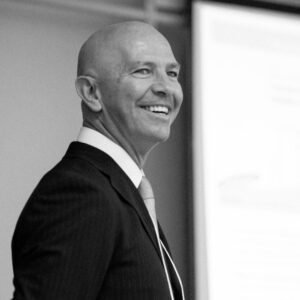
Professor Grant Black is a Professor in the Faculty of Commerce at Chuo University, Tokyo, Japan, where he has taught Global Skills and Global Issues since 2013. He is engaged in diverse roles as a global manager, systems builder, executive leader, and university professor. His research and teaching areas include global management skills, intercultural intelligence (CQ), and organisational management. He also has taught Japanese Management Theory at J. F. Oberlin University, Japan, and a continuing education course in the Foundations of Japanese Zen Buddhism at Temple University Japan. Previously, he was Chair of the English Section at the Center for Education of Global Communication at the University of Tsukuba, where he served in a six-year post in the Faculty of Humanities and Social Sciences. He holds a BA Highest Honors in Religious Studies from the University of California, Santa Barbara; an MA in Japanese Buddhist Studies from the University of California, Los Angeles; and a Doctor of Social Science (DSocSci) from the Department of Management in the School of Business at the University of Leicester. Professor Black is a Chartered Manager (CMgr), the highest status that can be achieved in the management profession in the United Kingdom. In 2018, he was elected a Fellow of the Chartered Management Institute (FCMI) and Fellow of the Royal Society of Arts (FRSA). Professor Black is President of Black Inc. Consulting (Japan), a Tokyo-based firm specialising in international and intercultural project management, communication projects, and executive leadership and training. He is the director of the Nippon Academic Management Institute (NAMI) and the author of Education Reform Policy at a Japanese Super Global University: Policy Translation, Migration and Mutation (Routledge, 2022). Professor Black serves as a Vice-President for the International Academic Forum (IAFOR).
Raul Fortes Guerrero
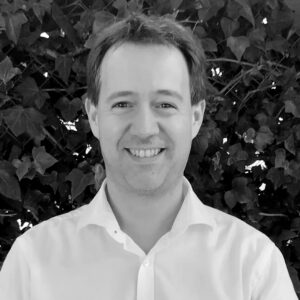
Professor Fortes-Guerrero combines his work as a researcher and lecturer of Japanese language and culture at the University of Valencia’s Area of East Asian Studies with his task as coordinator of the Asia and Oceania Committees at the university’s International Observatory of Intangible Culture and Global Village (UVObserver-Intangible Heritage), linked to the UNESCO Chair for Development Studies. He received his BA in Audiovisual Communication, his BA in History of Art with Special Distinction, and his PhD Cum Laude and International Doctor Mention in History of Art from the University of Valencia, Spain. To this can be added his duties as a member of scientific committees of congresses (XIV Congreso Nacional y V Congreso Internacional de la Asociación de Estudios Japoneses en España), peer reviewer for scientific journals (MIRAI. Estudios Japoneses, FOTOCINEMA. Revista Científica de Cine y Fotografía), and exhibitions curator (Hiroshige y su época. Visiones de la naturaleza en el arte japonés y chino del siglo XIX).
His research achievements have awarded him two prestigious fellowships (Association of International Education, Japan; Spanish Ministry of Education and Science’s National Teacher-Training Program) an Erasmus grant for teachers’ mobility, and research posts at Waseda University, Japan; Birkbeck, University of London, United Kingdom; and the University of Ljubljana, Slovenia.
Professor Fortes-Guerrero has authored a number of articles, books, and book chapters, including , among them the most comprehensive monograph on Japanese filmmaker Hayao Miyazaki written in Spanish (Hayao Miyazaki, Akal, 2019) and a reference film guide for his praised movie Spirited Away (“El viaje de Chihiro”. Hayao Miyazaki (2001), Nau Llibres/Octaedro, 2011).
Professor Fortes-Guerrero has also served as a translator for the reference journals “L'Atalante”. Revista de Estudios Cinematográficos and Hojas en la acera. Gaceta trimestral de haiku. He also publishes his tanka poems monthly in Kokoro no Hana, a renowned literary magazine published by the Japanese poetry society Chikuhaku-kai.
Apipol Sae-Tung
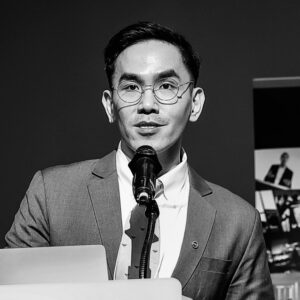
Apipol Sae-Tung is an Academic Coordinator at IAFOR, where he contributes to the development and execution of academic-related content and activities. He works closely with the Forum’s partner institutions and coordinates IAFOR’s Global Fellowship Programme. His recent activities include mediating conference reports for the Forum’s international conference programme and facilitating the IAFOR Undergraduate Research Symposium (IURS).
Mr Sae-Tung began his career as a Program Coordinator for the Faculty of Political Science at Chulalongkorn University, Thailand. He was awarded the Japanese Government’s MEXT Research Scholarship and is currently pursuing a PhD at the Graduate School of International Development, Nagoya University, Japan. His research interests are on foreign policy analysis, domestic politics, democratization, and comparative authoritarianism, and more recently on the role of Artificial Intelligence in these fields.
Mr Sae-Tung holds an MA in International Relations and Diplomacy from Thammasat University, Thailand, where he studied foreign policy analysis and Thailand-China relations. He also holds a BA in History from the same institution.
About the Presenter(s)
-Professor Grant Black is a Professor in the Faculty of Commerce at Chuo University, Tokyo, Japan, where he has taught Global Skills and Global Issues since 2013.
-Professor Fortes-Guerrero combines his work as a researcher and lecturer of Japanese language and culture at the University of Valencia’s Area of East Asian Studies with his task as coordinator of the Asia and Oceania Committees at the university’s International Observatory of Intangible Culture and Global Village (UVObserver-Intangible Heritage), linked to the UNESCO Chair for Development Studies.
-Apipol Sae-Tung is an Academic Coordinator at IAFOR, where he contributes to the development and execution of academic-related content and activities.
See this presentation on the full schedule – Saturday Schedule


Comments
Powered by WP LinkPress